Check out our weekly draw and events page

Welcome!
Non-fiction, Fiction & Business Communications
Hello!
Bookshelf
My library of non-fiction and select fiction works, directly from the author or through Amazon.

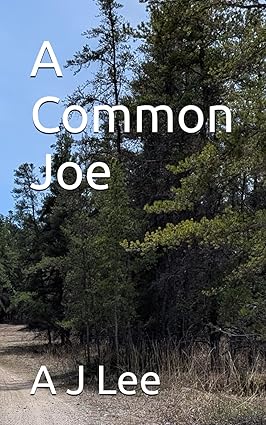
Psychologically hobbled by his past, Jonah Chabot attempts to find refuge away from his Duluth home deep in Manitoba’s backwoods. But he discovers that the more he retreats, the more civilization pursues him.
Duty, to him, is an obligation, taught incessantly by his mother, who loathed the world around her yet who knew that she had a responsibility to it. Joe, as he preferred to be called, fights his resentment of that call to duty as he uses all the skills that he has to help those who turn to him for assistance. And they are many.
His only escape always was the wilderness, but duty inevitably drew him back into society. Not this time. After his wife’s infidelity, after Covid, after the world went mad, he waited, hoping balance would return. It did not, and so he departed to Canada.
Here, he could regroup, understand why, and rejuvenate. But soon, he faces a life-threatening crisis of his own doing and one consigned to him by a new circle of friends that he did not want or invite into his life.
Jonah understood nature, though, even if he was confounded by how the civilized world that he knew was disintegrating. He saw how every supposedly rational process that man employed had existed in the animal world for eons.
Using that knowledge of common behaviour, this uncommon man must, once again, put aside his own wants in deference to the needs of others. This time, however, he chooses to do so, out of love for others rather than duty filled with resentment.

Delirious from heat stroke while on a months’ long trek around Manitoba, a man stumbles on a town along the Assiniboine River that he knows never existed, yet every fact points to its existence. He is welcomed by Fannie Megan, an old lady who implies that she is over a century old. While he rests at Desolation Station, a name derived from the remoteness of its location along the long-ago abandoned Harte rail line, he discovers that the old west town is a haven for a collage of people who have suffered immense crises in their lives.
However, the town, while real, is not what Cy sees it as. Each new arrival perceives the town differently, depending on their own unique experiences. Outside the enclave, the world carries on as usual, while inside the boundaries, Fannie guides the residents ostensibly on a healing journey.
Soon, Cyril discovers that he cannot escape the community’s clutches. There are sinister strata to the sanctum, but it is unclear who is masterminding the manipulation of each visitor. With the help of a teenage renegade, the two begin to peel back the layers of secrets. Their biggest challenge, however, will be to convince their friends and neighbours in Desolation Station that the place is not a haven, but closer to a hell.
Drawing on Milton’s “Paradise Lost” writings and Lewis Carroll’s poetry, the author explores the twists of individual illusions, delusions and perceptions, and how those shape each person’s reality.
While the group of tenants may band together to escape, the final twist reveals how they really do not escape their own realities. Desolation Station, after all, turns out to be real, but not in the manner that the inhabitants expected.

“Fear doesn’t stop death. It stops life.” Ann raised her four offspring exactly the same way, insisting that they face all the hardships that life could toss at them and never back down. Face fear without flinching. It was the paucity of the family’s everyday existence that would fortify them, shape them, and force them to survive. Her mantra was more than tough love. It was a snarling, attack-the-world-before-it-attacks-you philosophy that the children could either adopt and embrace or from which they could flee. Garry, of all her kids, took her dictum to heart. After all, Ann’s and her offspring’s hearts were not likely to be used for other purposes. And Garry needed her approval, more than anything in his life. He feared losing it, with everything he did and every breath he took.
His story is not unique, but his life is exceptional. A mechanical genius, a social eremite, Garry struggled to find his own way, but remained bound by the rules that Ann imposed, even in her death. He craved love and affection, yet fled from intimacy. Always struggling to succeed, always falling back as triumph seemed within reach, Garry lived the only way he could manage. It never was enough.